A student can generate a five-paragraph essay in seconds now.
That’s not a prediction. It’s happening in classrooms and at kitchen tables right now. And it raises a question every teacher and parent needs to sit with: If kids can use AI tools, does that mean they’re AI literate?
Hear me clearly: using a tool and understanding a tool are not the same thing.

AI Literacy vs. Simply Using AI Tools
Knowing how to type a question into a chatbot is a skill. But it isn’t literacy. AI literacy means kids understand:
- How it works (in kid-friendly terms): AI predicts the next most likely words. It can sound completely confident and still be wrong.
- When to use it, and when not to: some thinking is the whole point of the assignment.
- How to check it: verifying before believing, every time.
In my Better Humans program, older students learn the difference between offloading (letting AI do the thinking for you) and augmentation (using AI to sharpen your own thinking). That one distinction changes how kids approach every tool.
Why Reading Still Builds Judgment
Here’s something we don’t talk about enough: you can’t fact-check what you don’t know.
When kids read deeply, they build background knowledge, vocabulary, and attention. They learn how a good argument is built and what a trustworthy source sounds like. Over time, they develop an instinct that says, “Wait. That doesn’t sound right.”
That instinct is exactly what kids need when an AI tool hands them a polished answer. In an AI-saturated world, reading isn’t old-fashioned. It’s protection.

For Teachers: Model It Before You Assign It
Before we ask students to use AI, they need to see what responsible use looks like. Try this:
- Think aloud. Use an AI tool in front of your class and narrate your decisions: what you asked, why, and what you’d change.
- Show it being wrong. Find an answer that sounds right but isn’t, and let students catch it.
- Verify together. Practice SEARCH: Search a real question, Evaluate the source, Ask AI, Read critically, Cross-reference, and Hunt for bias or hallucination.
- Set clear norms. Tell students exactly when AI is allowed, when it isn’t, and how to note when they used it.
- Protect productive struggle. Some learning only happens when it’s a little hard. That’s not a bug. It’s the point.
If you’re just getting started with AI yourself, my 10-Minute Prep Challenge is an easy first step.

For Parents: No Fear Needed
You don’t have to be a tech expert to help your child think well about AI. Try this:
- Ask them to show you. “How do you use AI for school? Can you show me?”
- Ask the golden question: “How do you know that’s true?”
- Keep books around and read together, even with older kids. Talk about what you’re reading.
- Let them struggle a little. Being stuck for a few minutes is where learning happens.
For more on this, read Raising Better Humans in an AI World.
A Note for School Leaders
Before rolling out new AI tools, give your teachers three things: a clear and simple AI policy, real professional learning with time to practice, and a common vocabulary for students and families. Efficiency should never become one more thing on a teacher’s plate.
Building A Better Tribe in an AI World
The goal isn’t to keep kids away from AI. It’s to raise kids who can think for themselves while using it.
Read together. Model before you assign. Ask, “How do you know?” And keep building better humans, one conversation at a time.
Your friend,
Vimbo
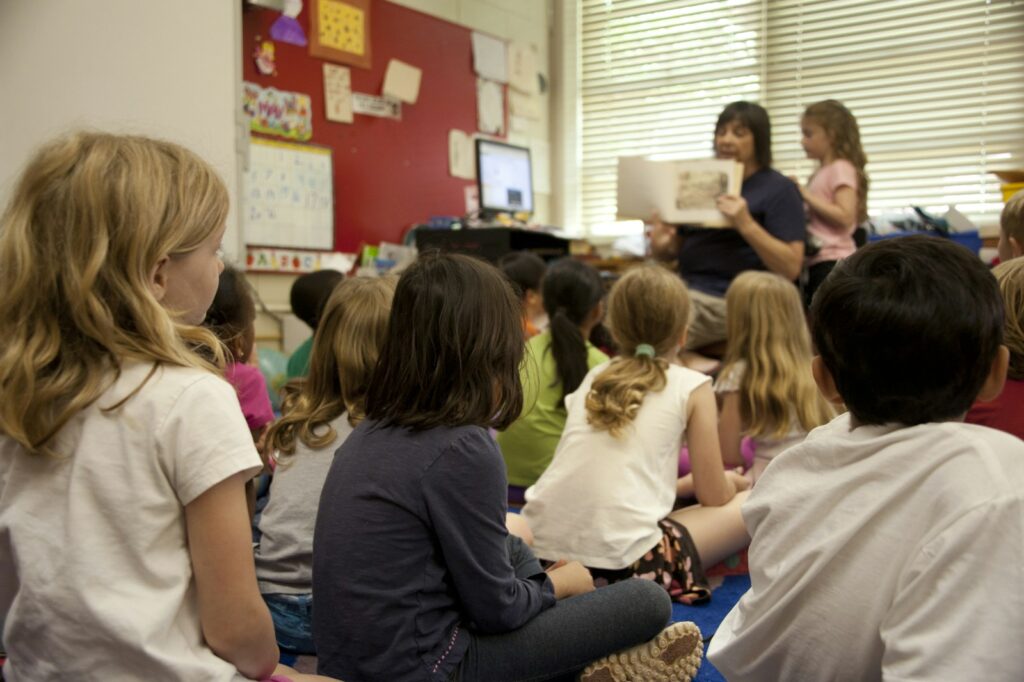
Featured photo: DOKYUNG KIM on Unsplash.
Get Classroom-Ready Ideas in Your Inbox Every Monday
Join teachers, parents, and school leaders who get the Build Better Newsletter every Monday morning: practical, research-informed ideas you can use that same week. When you subscribe, you’ll also get my free guide, 25 AI Prompts to Help Kids Learn, for Teachers & Parents.
